
Hajj & Umrah Learning Centre
Prepare yourself for the journey before you travel. Explore authentic guides, recommended books, video lessons, and practical resources based upon the Qur'ān and Sunnah.
Preparing for an Accepted Hajj (Hajj Mabroor)
Hajj is a sacred journey of a lifetime. Every pilgrim hopes for a Hajj Mabroor—a pilgrimage accepted by Allāh that brings His forgiveness and the promise of Paradise. Preparing for this journey begins long before you travel, through sincere repentance, sound knowledge, lawful provision, and a heart devoted to Allāh.
Foundations of an Accepted Hajj
Scholars highlight several spiritual and behavioral practices necessary to ensure your Hajj meets the criteria of being accepted (Mabroor):
Absolute Sincerity (Al-Ikhlas)
Perform the pilgrimage solely for Allāh's pleasure. Guard against showing off (Riya'), seeking fame, or doing it to be addressed as "Hajji" in your community.
Pure and Lawful (Halal) Wealth
Ensure your entire journey is financed with 100% lawful earnings. "Allāh is Good (Pure) and accepts only that which is good (pure)."
Strict Adherence to the Sunnah
Follow the rites precisely as practiced and commanded by Prophet Muhammad (ﷺ). Avoid introducing innovations (bid'ah) or skipping established obligations as well as Sunnah.
Avoid Sin, Obscenity, and Arguments
Distance yourself from gossip, sin (fusuq), intimate speech during Ihram (rafath), and arguing with companions or workers. Maintain patience, modesty, and emotional restraint.
Generosity and Exemplary Character
Be of high service (khidmah) to fellow pilgrims. Actively feed people, share water, speak politely, and keep a pleasant demeanor during travel difficulties.
Rewards of Hajj Mabroor
"There is no reward for an accepted Hajj (Hajj Mabroor) other than Paradise."
An accepted Hajj cleanses the soul completely. Another authenticated narration promises: "Whoever does Hajj for the sake of Allah and does not have sexual relations (with his wife), commit sin, or dispute unjustly during the Hajj, will come back like the day his mother gave birth to him." (Sahih al-Bukhari: 1521; Sahih Muslim: 1350)
Applies to Obligatory & Voluntary
Scholarly consensus confirms that the grand reward of Paradise and the total forgiveness of sins apply to both obligatory (Fard) and voluntary (Nafl) Hajj, provided the conditions of sincerity and correctness are fully satisfied.
Important Scholarly Guidance & Disclaimer
This page is designed as an interactive quick guide based upon the Qur'an and Sunnah. It does not replace the necessity of studying under qualified scholars, attending live seminars, and consulting reputable Islamic authorities for specific personal jurisprudence (Fatawa) queries.
The Rulings of Hajj & Umrah
Understanding whether these journeys are mandatory or voluntary, and for whom they are prescribed.
Ruling on Hajj
Pillar of Islam (Fard 'Ayn)Hajj is the fifth pillar of Islam. It is an absolute individual obligation (Fard 'Ayn) once in a lifetime for every Muslim who meets the conditions of ability.
"And Hajj to the House is a duty that mankind owes to Allāh, those who can afford the journey."
— Surah Al 'Imran, 3:97
Ruling on Umrah
Obligatory (Wajib)According to the most correct scholarly view (the Shafi'i and Hanbali schools), Umrah is also obligatory once in a lifetime for those capable, just like Hajj. Others (Hanafi, Maliki) view it as a highly emphasized Sunnah.
"And perform properly the Hajj and 'Umrah for Allāh."
— Surah Al-Baqarah, 2:196
The 5 Conditions of Obligatory Pilgrimage
Hajj and Umrah only become an absolute duty upon a person when they fulfill the following essential criteria of religious obligation (Shurut al-Wujub):
Being a Muslim
The person must be a Muslim. Acts of worship are only accepted from those who have embraced the Islamic faith.
Sound Mind (Al-'Aql)
The person must be of sound mind and sane. The insane are not held accountable under Islamic law.
Adulthood (Al-Bulugh)
The person must have reached puberty. Children may perform Hajj or Umrah for reward, but it does not replace their obligatory lifetime Hajj or Umrah.
Freedom
The person must be free. (This condition was relevant in classical times and indicates full control over one's schedule and travel).
Ability (Al-Istita'ah)
Possessing sufficient money for travel, accommodation, and support of dependents at home, along with physical health to complete the journey safely.
Performing Umrah
A concise, authentic walkthrough of the essential rites of Umrah.
The Forms of Hajj
There are three valid forms of Hajj. Understanding these helps clarify the ritual intents.
Tamattu'
The pilgrim enters Ihrām with the sole intention of performing Umrah during the Hajj season. After completing Umrah, the pilgrim exits Ihrām fully, wearing regular clothes. On the 8th of Dhul-Hijjah, a new Ihrām is worn to start Hajj.
- Separate Ihrām for each rite
- Hady (Sacrifice) is required
- Offers high convenience
Qirān
The pilgrim enters Ihrām with the joint intention of performing Umrah and Hajj together. The pilgrim completes Umrah first but remains in the state of Ihrām continuously without releasing it, proceeding to perform the Hajj rites in the same Ihrām.
- Continuous single Ihrām state
- Hady (Sacrifice) is required
- Demands great discipline
Ifrād
The pilgrim enters Ihrām with the sole intention of performing Hajj only. No Umrah is included in this option. The pilgrim stays in the state of Ihrām continuously until completing the core rituals of Hajj, including stoning and cutting hair on Eid day.
- Exclusive Hajj-only focus
- No Hady sacrifice required
- Ideal for local residents
Recommendation Note: For most pilgrims travelling from Bangladesh through organised Hajj packages, Tamattu' is generally the form performed. This is also the best type of Hajj as the Prophet (ﷺ) enjoined upon his Companions and urged them to do. Your Hajj guide will explain the practical details and any exceptions.
Interactive Journey of Hajj
A step-by-step walkthrough of the sacred rites of Hajj, starting from the 8th of Dhul Hijjah.
Connecting Umrah & Hajj Tamattu'
Most pilgrims travelling from Bangladesh perform Hajj Tamattu', which begins with an Umrah (the step-by-step guide detailed in the section above). Once your Umrah is complete, you exit the state of Ihrām and return to normal clothing. On the 8th of Dhul Hijjah, you re-enter the state of Ihrām at your accommodation to begin the continuous rites of Hajj described below.
Why is only Hajj Tamattu' detailed here?
This step-by-step interactive navigator details the rituals of Hajj Tamattu', as it is the most common form chosen by Bangladeshi pilgrims traveling via organized packages and also the best type of Hajj as per the guidance of the Prophet (ﷺ). The core rites of the other two forms, Qirān and Ifrād, are largely identical to Tamattu', with primary differences relating only to when you enter/exit Ihrām, whether an initial Umrah is performed, and whether a animal sacrifice (Hady) is mandatory. To avoid presenting three repetitive guides, we present a single clear pathway. Please consult qualified scholars or your Hajj group guides for the specific comparative differences if performing Qirān or Ifrād.
Guidelines for Madinah Al-Munawwarah
Islamic etiquettes and guidelines for visitors to the Prophet's Mosque (Al-Masjid an-Nabawi).
The Mosque of the Prophet (ﷺ)
Visiting Madinah Al-Munawwarah is not a required ritual of Hajj or Umrah. Rather, it is an independent, highly recommended act of devotion. Your primary intention when traveling to Madinah should be to visit the Prophet's Mosque and pray inside it, which yields immense spiritual rewards.
"One prayer in this mosque of mine is better than a thousand prayers anywhere else, except Al-Masjid al-harām." — Sahih al-Bukhari: 1190; Sahih Muslim: 1394
Step-by-Step Etiquettes for Visitors
Enter with Supplication
Enter Al-Masjid an-Nabawi with your right foot first and recite:
بِسْمِ اللَّهِ، وَالصَّلَاةُ وَالسَّلَامُ عَلَى رَسُولِ اللَّهِ، اللَّهُمَّ اغْفِرْ لِي ذُنُوبِي، وَافْتَحْ لِي أَبْوَابَ رَحْمَتِكَ
Meaning: "In the name of Allāh. Peace and blessings be upon the Messenger of Allāh. O Allāh, forgive my sins and open for me the gates of Your mercy."
Tahiyyat al-Masjid in the Rawdah
Perform two Rak'ahs of mosque greeting prayer, preferably in the noble Rawdah al-Sharifah (the area between the Prophet's house and his Minbar, marked by green carpets) if possible and safe without pushing or causing harm to other worshippers.
Greet the Prophet & His Companions
Walk quietly and respectfully to the grave of the Prophet (ﷺ), face it, and say: "As-salāmu 'alayka yā rasūlallāhi, wa rahmatullāhi wa barakātuh" (Peace be upon you, O Messenger of Allāh, and the mercy of Allāh and His blessings). Then take a step to the right and greet Abu Bakr (رضي الله عنه): "As-salāmu 'alayka yā Abā Bakr." Then take another step to the right and greet Umar (رضي الله عنه): "As-salāmu 'alayka yā 'Umar."
Avoid Innovations & Shirk
Crucial Safeguard: One must not touch or wipe the metal grills, gates, or walls of the Prophet's tomb, as doing so is an innovation (Bid'ah). Furthermore, do not direct any prayers (Du'ā) to the Prophet (ﷺ) or ask him for help or intercession directly. Supplications must be directed solely to Allāh while facing the Qiblah.
Visit Masjid Quba
It is highly recommended to perform Wudu at your accommodation, then travel to the Mosque of Quba and pray two Rak'ahs there. The Prophet (ﷺ) said: "Whoever purifies himself in his house, then comes to Masjid Quba and offers a prayer therein, will have a reward like that of an Umrah." (Sunan Ibn Majah: 1412).
Visit Al-Baqi' & Uhud (For Men)
It is Sunnah for men to visit the Baqi' cemetery (adjacent to the Prophet's Mosque) where many noble companions are buried, and to visit the graves of the martyrs of the Battle of Uhud (including Hamzah, may Allāh be pleased with them) to pray for their forgiveness.
Hajj & Umrah Rulings Specific to Women
Clarifying the distinct rules, dispensations, and etiquettes established for female pilgrims in the Sunnah.
1. Mahram Requirement
A woman must travel for Hajj or Umrah accompanied by her husband or a Mahram (permanently unmarriageable male relative). Traveling without a Mahram is prohibited.
2. Ihrām Garments
Women have no specific color or pattern of dress for Ihrām; they wear ordinary, loose-fitting, modest clothing that covers their entire body. She must not wear a Niqab or gloves. When non-Mahram men pass near her, she should draw her head-covering or some other cloth down over her face to cover it.
3. Reciting the Talbiyah
Unlike men, women should not chant the Talbiyah loudly. She should recite it softly, in a low voice that only she or the women right next to her can hear.
4. Menstrual Dispensations
If menstruation begins, her Ihrām is fully valid. She does all rituals (staying in Mina, Arafah, stoning) EXCEPT Tawāf and Sa'i. She must wait until she is pure, takes Ghusl, and then completes them.
5. Exiting Ihrām (Taqsir)
To release herself from Ihrām constraints, a woman never shaves her head (which is forbidden for women). She only gathers her hair locks and trims a single fingertip's length (approx. 1-2 cm) from the ends.
Learn Through Video Lessons
Comprehensive lecture series and video demonstrations to clarify practical actions and avoid common errors.
Recommended Books
Trusted literature from respected publishers based on authentic narrations.
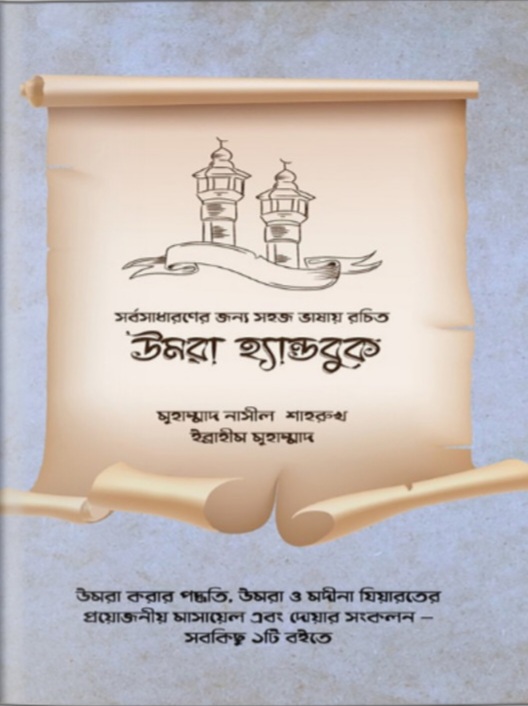
উমরা হ্যান্ডবুক
A complete, easy-to-read manual outlining the essential rules, steps, tips and authentic supplications for Umrah.
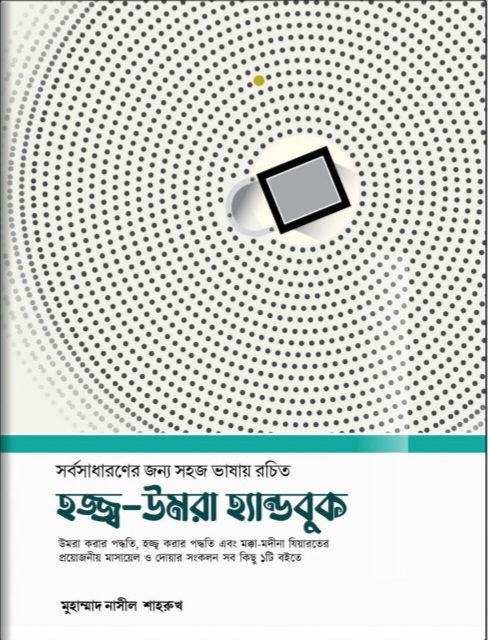
হজ্জ্ব-উমরা হ্যান্ডবুক
A comprehensive volume offering precise details and day-by-day instructions, practical tips and authentic supplications for both Hajj and Umrah.
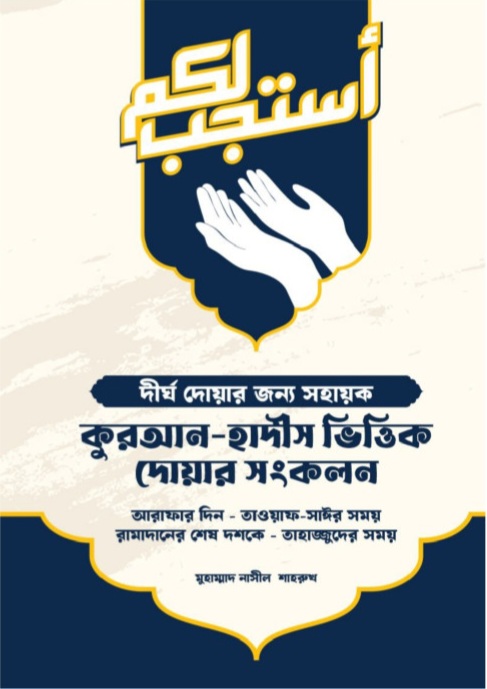
কুরআন হাদীস ভিত্তিক দোয়ার সংকলন
A selection of authentic, highly beneficial supplications compiled from the Holy Qur'ān and authentic prophetic Sunnah literature that you can utilize during his Hajj travel.
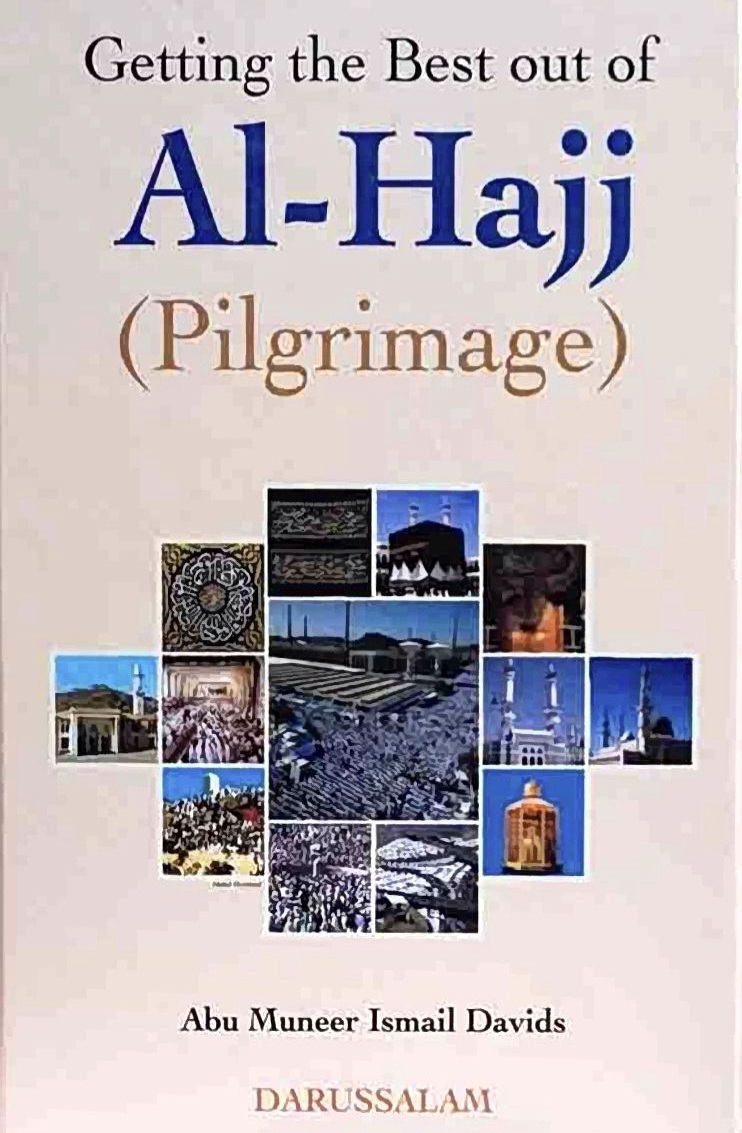
Getting the Best out of Al-Hajj
An invaluable scholarly work outlining practical tips, health guidelines, and spiritual advice to maximize your rewards during Hajj.
Hajj Packing Checklist
Prepare your luggage step-by-step with zero omissions.
Hajj Packing Checklist
A printable checklist will be added soon to help pilgrims prepare their luggage. Stay tuned for a complete list covering documents, medication, clothing, toiletries, and flight essentials.